Two foods can have the exact same amount of carbohydrate and still affect your blood sugar very differently. There’s a number that predicts this, called the glycaemic index. It’s a genuinely useful piece of the diabetes-management puzzle, one worth understanding properly so you know where it actually fits.
About 9.1% of Singapore residents aged 18 to 74 have diabetes, according to the National Population Health Survey 2024. Managing it usually comes down to keeping blood sugar steady, and what you eat is one of the biggest levers you have. The glycaemic index is one tool for that job. As this article explains, it works best alongside something more basic: how much carbohydrate you’re eating in the first place. Below: what GI measures, what a low-GI label in Singapore means, what local rice research found, and why portion size still does most of the work.
What the Glycaemic Index Measures
The glycaemic index (GI) ranks carbohydrate foods from 0 to 100. The score shows how quickly and how far a food raises blood sugar, compared with pure glucose, a type of sugar. Foods scoring 55 or below count as low GI. Scores of 56 to 69 are medium, and 70 or above is high, using the standard classification. An SGH dietitian, writing on HealthXchange, lists soft drinks and juices as high-GI examples. They are digested quickly and cause large peaks in blood sugar.
Only foods that contain carbohydrate get a GI. The Tan Tock Seng Hospital health library adds a caution. GI is not a reflection of how healthy a food is. The SGH dietitian gives chocolate as an example. Its fat content lowers its GI, yet it is very energy-dense.
What a Low GI Label Means in Singapore
Since 2014, packaged foods in Singapore can carry a low-GI version of the Healthier Choice Symbol. To earn it, a product must first meet the symbol’s nutrient guidelines for its food category. These limit things like energy, fat, saturated fat, sugars, and sodium.
The product must also test at a GI of 55 or below. It needs at least 7.5 g of carbohydrate per serving to qualify for testing. HPB’s application guide says the test must be done on people (in vivo) at an accredited laboratory. The criteria are set out in HPB’s nutrient guidelines.
So the symbol tells you two things. The product met nutrient limits for its category, and it tested at 55 or below. It does not tell you how much you’ll eat, what you’ll eat it with, or how your body will respond, all of which matter more than the label alone. The sections below walk through each.
Cooking and Preparation Change the Number
The GI of the same dish can differ a lot. On HealthXchange, an SGH dietitian says the GI of hawker food is extremely variable from one hawker to the next. The reason is that recipes differ. The amount of fat, sauces, and gravies varies.
Her page lists more everyday examples:
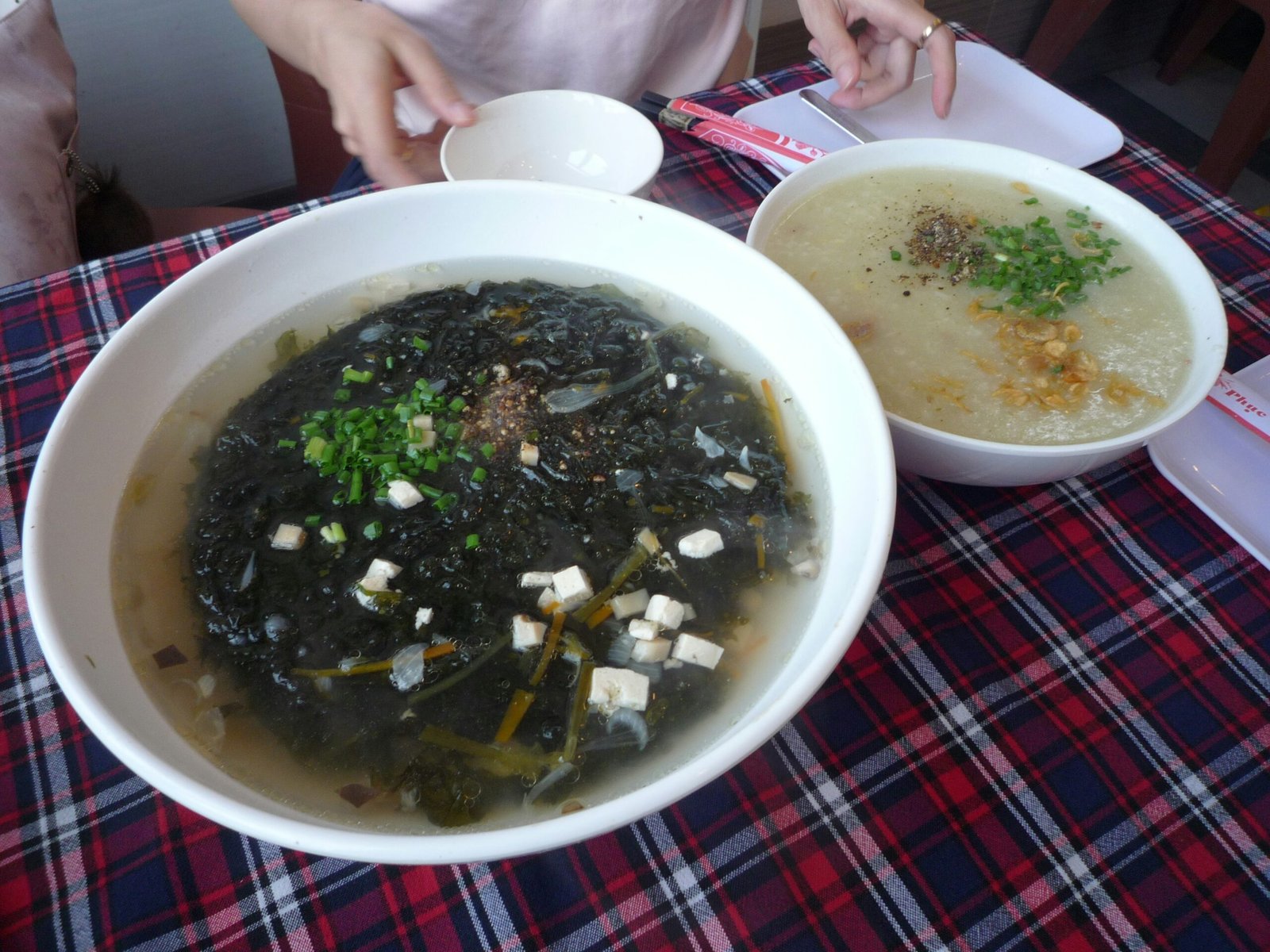
- Rice porridge has a higher GI than steamed rice. One bowl of rice and two of porridge hold similar carbohydrate. In porridge, more of the starch is exposed to digestive enzymes, so it is absorbed faster.
- Overcooking raises GI. Pasta cooked al dente has a lower GI than pasta cooked for longer.
- Processing raises GI. Wholegrains ground into flour have a higher GI than the intact grain.
- Ripeness matters. Victoria’s Better Health Channel says a banana’s GI can rise from about 30 unripe to 51 ripe.
Diabetes UK adds that a GI value describes a food eaten on its own. Most of us eat foods together as meals.
Low GI Rice in Singapore: What Local Research Found
Rice is a daily staple here, and Singapore researchers have tested it. A study from A*STAR and NUS gave 75 healthy men jasmine rice and basmati rice. Twenty-five were Chinese, 25 Malay, and 25 Indian.
| Rice tested | Average GI | Category |
|---|---|---|
| Jasmine rice | About 91 | High |
| Basmati rice | About 59 | Medium |
The GI values did not differ significantly between the three ethnic groups.
The basmati result surprised the researchers. The rice they tested was sold in Singapore with a low-GI claim on its packaging, yet it averaged 59. That is close to the cut-off of 55. Results also varied widely between participants, with a standard deviation of about 15. GI values also vary between tests. The international tables cited in the study list jasmine rice from 48 to 109 and basmati from 43 to 69.
The study had limits. It tested only two rice products, in healthy men.
What You Eat With Rice Changes the Effect
Another Singapore study looked at the rest of the plate. Twelve healthy volunteers ate white rice alone. They also ate it with chicken breast, groundnut oil, a leafy vegetable, or all three.
| Meal | GI |
|---|---|
| White rice alone | 96 |
| White rice with oil | 67 |
| White rice with chicken breast | 73 |
| White rice with leafy vegetable | 82 |
| White rice with chicken, oil, and vegetable | 50 |
The researchers concluded that all three together lowered the blood sugar response more than any single addition. They found that this did not come at the cost of a higher insulin response. Chicken on its own did raise the insulin response, even though it lowered the blood sugar response.
This was a small trial in healthy adults, so treat it as a clue rather than a prescription. It also has a limit. SGH’s senior principal dietitian, Ms Kala Adaikan, noted that fried rice would have a lower GI than white rice. The reason is its fat content. A lower GI does not make a dish healthier.
Does Choosing Low GI Actually Help?
For people with diabetes, a little. A 2021 BMJ analysis pooled 29 trial comparisons in 1,617 people with type 1 and type 2 diabetes. Low-GI or low-glycaemic-load eating patterns lowered HbA1c by about 0.3 percentage points compared with higher-GI patterns. HbA1c is a blood test that reflects your average blood sugar over recent months. Most participants were already taking diabetes medicine or insulin.
Glycaemic load also takes into account how much carbohydrate is in a serving. Harvard Health gives watermelon as an example. It has a high GI of 80, but a serving has so little carbohydrate that its load is only 5.
The trials had a median follow-up of 12 weeks, and about 90% of participants had type 2 diabetes. The researchers described the benefit as small but clinically meaningful for people whose diabetes was moderately controlled. They also called for larger, higher-quality trials.
Portion size still matters more. Diabetes UK says the most important step is to watch your carbohydrate portions, with low-GI choices as an added bonus. The SGH dietitian says total carbohydrate has a much bigger effect on blood sugar control than GI alone. Harvard Health agrees. Total carbohydrate predicts what will happen to your blood sugar better than GI or load does.
Practical Takeaways
- Count your portion first, before you think about GI. This single habit does more for your blood sugar than choosing low-GI foods ever will.
- Know which everyday staples run high. White rice, rice porridge, sweetened drinks, and white bread are all high GI. None of them need to disappear from your diet, but they’re worth eating with intention.
- Use GI as a tiebreaker, not a health rating. Between two similar options, the lower-GI one is a reasonable pick. A low GI alone does not make a food nutritious, and a high GI does not make it off-limits.
- Pick your rice at home, control your plate at a stall. At home, basmati measured lower than jasmine in the Singapore study. At a hawker stall, portion and the rest of the plate are what you can actually control.
- Don’t eat rice alone. Add protein, vegetables, and some oil, as in the trial above.
- Go easy on porridge. For the same amount of carbohydrate, it raises blood sugar faster than steamed rice.
- For packaged foods, look for the low-GI Healthier Choice Symbol, then check the serving size. The symbol tells you the product was tested; it doesn’t tell you how much to eat.
- Get personal advice. If you have diabetes, ask a dietitian to plan meals around your own readings.
Frequently Asked Questions
Is rice porridge better or worse than plain rice for blood sugar?
Worse, gram for gram of carbohydrate, according to an SGH dietitian. One bowl of steamed rice and two bowls of porridge hold similar carbohydrate. The starch in porridge is absorbed faster. A small bowl is not a problem in itself. The point is not to assume porridge is the gentler choice.
Why does the same food affect people differently?
SGH’s dietitian notes that people digest carbohydrate at different rates. GI lists may therefore not be reliable for an individual. In the Singapore rice study, even the same glucose drink produced noticeably different blood sugar responses from person to person.
If a food is low GI, can I eat more of it?
No. Diabetes UK points out that GI compares foods with the same amount of carbohydrate. In real life we eat different amounts. Portion size still counts.
The Bottom Line
The glycaemic index is a useful idea with modest evidence behind it. Two small Singapore studies suggest that rice choice and what you eat with it can matter a great deal. Portion size still does most of the work.
Noodles are not an automatic swap. A large Singapore study found that replacing rice with noodles was linked to higher diabetes risk. For more, see our piece on white rice and diabetes risk. For the plate method that puts this into practice, see eating right for diabetes prevention. For another everyday source of fast-rising sugar, see why fruit juice isn’t as healthy as you think.
Sources
- Ministry of Health / Health Promotion Board: National Population Health Survey 2024, infographic
- HealthXchange: Diabetes and Glycaemic Index, What You Need to Know (SGH dietitian)
- HealthXchange: SGH, CGH Dietitians on Low GI Diets (2018)
- Tan Tock Seng Hospital Health Library: Glycaemic Index
- Barclay et al.: Dietary Glycaemic Index Labelling, A Global Perspective, Nutrients (2021)
- Health Promotion Board: Healthier Choice Symbol Nutrient Guidelines (revised July 2025)
- Health Promotion Board: A Guide for Healthier Choice Symbol Application (2024)
- Tan, Wu, Henry, Lee: Glycaemic and Insulin Responses, Glycaemic Index and Insulinaemic Index Values of Rice Between Three Asian Ethnic Groups, British Journal of Nutrition (2015)
- Sun, Ranawana, Leow, Henry: Effect of Chicken, Fat and Vegetable on Glycaemia and Insulinaemia to a White Rice-Based Meal in Healthy Adults, European Journal of Nutrition (2014)
- Diabetes UK: Glycaemic Index and Diabetes
- Better Health Channel (Victoria, Australia): Carbohydrates and the Glycaemic Index
- Chiavaroli et al.: Effect of Low Glycaemic Index or Load Dietary Patterns on Glycaemic Control and Cardiometabolic Risk Factors in Diabetes, BMJ (2021)
- HCPLive: Low Glycemic Index Dietary Pattern Improves HbA1c in Patients with Diabetes (summary of the BMJ analysis)
- Harvard Health: The Lowdown on Glycemic Index and Glycemic Load