Ketones are chemicals your body makes when it runs short of insulin. Small amounts do no harm, but high levels can lead to a diabetes emergency. This guide explains what they are, when to test, and a risk linked to some common diabetes medicines.
If you have diabetes, you may have been told to “check your ketones” without being told why. This guide explains ketones and diabetes in plain terms, for people in Singapore. It is written for people with diabetes and for the family members who look after them. If you take insulin or an SGLT2 inhibitor, read it closely. It covers what ketones are, when to test, what the readings mean, and a medicine-related risk that Singapore’s Health Sciences Authority (HSA) has warned about. If you are new to diabetes, start with what diabetes is.
What Are Ketones?
Your body runs on glucose, the sugar in your blood. Insulin is the hormone that lets glucose move into your cells for energy. When there is not enough insulin, your cells cannot use the glucose. Your body burns fat instead, and the fat produces an acidic substance called ketones.[2]
Small amounts of ketones are simply passed out of the body and cause no harm.[2] The danger comes when there is almost no insulin in the body and ketones build up.[2] The blood becomes too acidic, which is called diabetic ketoacidosis, or DKA. Untreated, DKA can lead to death.[1] Our guide to DKA treatment explains what to do and what happens at the hospital.
The Warning Signs
DKA symptoms often come on quickly, sometimes within 24 hours. They include:[1]
- Being very thirsty
- Urinating often
- Feeling sick and vomiting
- Belly pain
- Feeling weak or tired
- Being short of breath
- Breath that smells fruity
- Feeling confused
If you have many of these signs, get emergency care.[1] In Singapore, call 995.[3]
When to Test for Ketones
Testing advice differs between organisations. JDRF and Healthline suggest testing when your blood sugar is 240 mg/dL (13.3 mmol/L) or higher.[4][5] NHS Scotland suggests 15 mmol/L, or 13.9 mmol/L if you use an insulin pump (explained below), and adds that local teams may use different levels.[2] Blood sugar is measured in two units. Singapore usually uses mmol/L, while many overseas websites use mg/dL. Ask your own diabetes team which level they want you to use.
If you use an insulin pump, the cut-off is lower, as NHS Scotland’s 13.9 mmol/L shows. An insulin pump is a small device that gives you insulin all day through a thin tube placed under the skin of the belly.[12] If the pump stops delivering, you can quickly run short of insulin and risk DKA. SingHealth advises checking your glucose if delivery is paused for more than an hour.[12]
Test during illness too. Ketone testing is one way to avoid DKA when you are unwell.[9] Singapore’s National University Hospital (NUH) advises people with type 1 diabetes to check blood glucose and blood ketones every two hours when ill.[11]
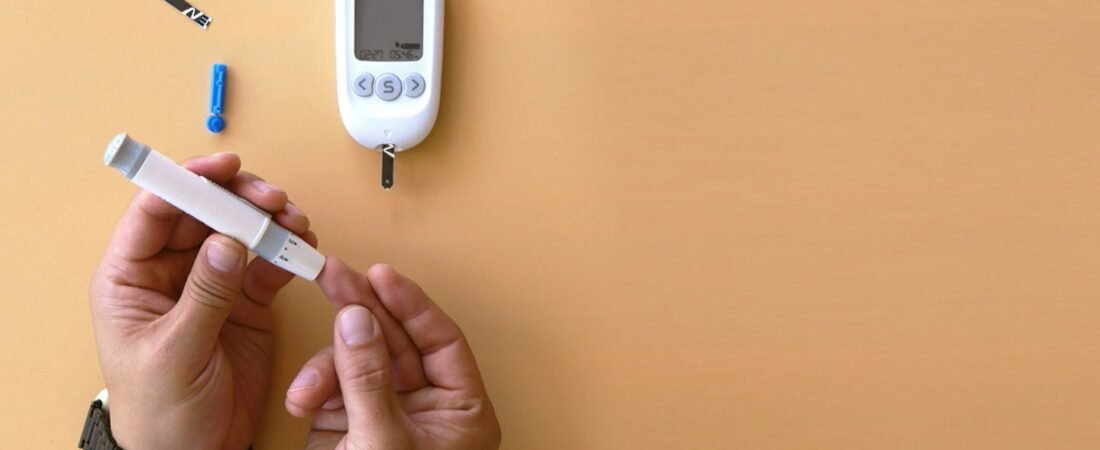
There are two ways to test. Check with your hospital pharmacy about where to get strips or a meter. Your diabetes team can tell you which one suits you. A urine strip checks your urine for ketones. A blood ketone meter checks a drop of blood, the way a glucose meter does.
NHS Scotland gives these blood ketone readings as a guide. The unit, mmol/L, is the same one used for blood sugar.[2]
| Blood ketone reading | What it means | What to do |
|---|---|---|
| Below 0.6 mmol/L | Normal | Nothing extra |
| 0.6 to 1.5 mmol/L | A warning sign that you are starting to make ketones | Keep checking and follow your sick-day plan |
| Above 1.5 mmol/L | At risk of DKA | Contact your diabetes doctor or nurse, or an out-of-hours service |
| Any level, with symptoms | Possible DKA | Go to the emergency department immediately |
The last row applies if you are sick, vomiting, have stomach pains, or feel drowsy.[2] These numbers come from a UK health service, so your own team may use different ones. For example, NUH tells people with type 1 diabetes to go to the emergency department immediately if blood ketones are above 3.0 mmol/L. If you feel unwell and cannot check your ketones, NUH says to get medical attention promptly.[11]
Ketones and Diabetes in Singapore: The SGLT2 Inhibitor Risk
SGLT2 inhibitors are a group of diabetes medicines. Three of them are registered in Singapore: canagliflozin (Invokana), dapagliflozin (Forxiga), and empagliflozin (Jardiance).[6][8] HSA has issued several safety alerts about them.
HSA’s concern is DKA. Some cases were euglycaemic DKA. This means DKA that develops even though blood sugar is not high. HSA defined it as blood glucose below 13.9 mmol/L.[8]
HSA reported local cases in Singapore. By August 2015, it had received three serious reports of DKA linked to these medicines.[6] By February 2016, it had five DKA cases and one case of ketones in the blood, and all six patients needed hospital care. Two of the cases were euglycaemic DKA. The time from starting the medicine to DKA ranged from 11 to 169 days.[8]
HSA judged that the benefits still outweighed the risks for approved uses. It also said an increased risk of DKA “cannot be excluded”.[7][8] It listed factors that can make DKA more likely. They include type 1 diabetes, a lack of insulin-making ability in the body, a lower insulin dose, eating fewer calories, infection or other illness, surgery, and heavy alcohol use.[8]
For patients, this changes the usual advice. The usual rule is to test ketones when your blood sugar is high. On an SGLT2 inhibitor, a normal blood sugar does not rule out DKA. HSA told doctors to test blood ketones in patients with signs of too much acid in the blood, even when blood glucose is not high. It also said the medicine should be stopped if ketoacidosis is suspected.[8] The signs HSA lists are rapid or deep breathing, loss of appetite, belly pain, nausea, vomiting, unusual tiredness, and changes in mental state. HSA says to seek medical attention promptly if they appear.[8]
So if you take an SGLT2 inhibitor and feel unwell with these signs, test your ketones and call your doctor, whatever your glucose reading says. Do not stop the tablet on your own. SGH advises staying hydrated and keeping up your eating when you are ill, because these medicines make you lose more glucose and water in your urine and may raise ketone risk. If you cannot eat and drink, call your doctor or diabetes nurse. They may tell you to stop the tablet for a while.[10] If you are not sure whether yours is an SGLT2 inhibitor, ask your pharmacist.
These HSA alerts date from 2015 and 2016. Ask your doctor or pharmacist for current guidance on your medicine.
Sick Days: How to Lower the Risk of DKA
A sick day is a day when you are unwell with an illness such as flu, a cold, a cough, a mild fever, or diarrhoea.[10][11] Illness puts stress on your body. It releases stress hormones that can raise your blood glucose, even if you eat very little.[11] Vomiting can also dry you out and push glucose higher.[10] That is why DKA is more likely when you are ill.
A sick-day plan is a plan from your diabetes team that tells you how to manage your glucose and ketones while you are ill. It helps prevent DKA and low blood sugar.[11] If you do not have one, ask your doctor or diabetes nurse at your next visit. Until then, these steps apply:[9]

- Never stop taking your insulin.
- Drink plenty of fluids. Your team can tell you whether to choose sugar-free drinks or sugary ones, depending on your glucose.[10]
- Sip carbohydrate drinks or foods slowly through the day to keep your calorie intake up.
- Check your blood glucose more often than usual. Singapore hospitals suggest anywhere from every two hours to four to six times a day, so ask your team what applies to you.[9][10][11]
- Test for ketones.
- Get help straight away if you cannot keep fluids down, keep vomiting, have high ketones that will not come down, or have breathlessness or stomach pain. Do not delay.
If your care team has given you a sick-day plan, follow it. It may include changes to your insulin that are specific to you.
Frequently Asked Questions
Can people with type 2 diabetes get DKA, or is it only a type 1 problem?
People with type 1 diabetes have the highest risk. DKA can also happen with type 2 diabetes.[1] In type 2, some diabetes medicines, such as SGLT2 inhibitors, can add to the risk.[8]
If my ketone test shows a result, should I panic?
No. Small amounts of ketones cause no harm.[2] The reading and how you feel both matter. Use the table above as a guide. If you are above 1.5 mmol/L, contact your diabetes team. If you have symptoms, go to the emergency department.[2]
I take an SGLT2 inhibitor and my glucose looks normal, but I feel unwell. Could this still be DKA?
Yes. This is the euglycaemic pattern HSA has warned about. Test your ketones and contact your doctor.[8]
The Bottom Line
Ketones are not always a problem. Small amounts are harmless, and trouble starts when they build up because there is too little insulin. Test when your glucose is high or when you are ill, never stop your insulin, and get help early. If you take an SGLT2 inhibitor, remember that DKA can happen even with a normal blood sugar reading. This article is general education and does not replace advice from your own care team. If you have type 1 diabetes, are pregnant, or use an insulin pump, talk to your team about your own plan. If you think you may be in DKA right now, read our guide to what to do and what happens at the hospital.
Sources
- Mayo Clinic: Diabetic Ketoacidosis, Symptoms and Causes
- NHS Scotland, My Diabetes My Way: Ketones and Diabetic Ketoacidosis
- SCDF: Emergency Medical Services
- JDRF: Diabetic Ketoacidosis (DKA), Symptoms and Prevention
- Healthline: Diabetic Ketoacidosis in Type 2 Diabetes
- Health Sciences Authority Singapore: Interim Update on Risk of Serious Ketoacidosis Associated With SGLT2 Inhibitors (30 September 2015)
- Health Sciences Authority Singapore: Risk of Diabetic Ketoacidosis Associated With SGLT2 Inhibitors (24 February 2016)
- Health Sciences Authority Singapore: SGLT2 Inhibitors and Risk of Serious Diabetic Ketoacidosis (19 May 2016)
- NHS Fife: Diabetes Emergencies, DKA and How to Avoid It
- Singapore General Hospital: Living With Diabetes, Managing Your Glucose on Sick Days
- National University Hospital: Sick Day Management (for people with type 1 diabetes), 27 September 2024
- SingHealth Diabetes Centre: Insulin Pump Essentials