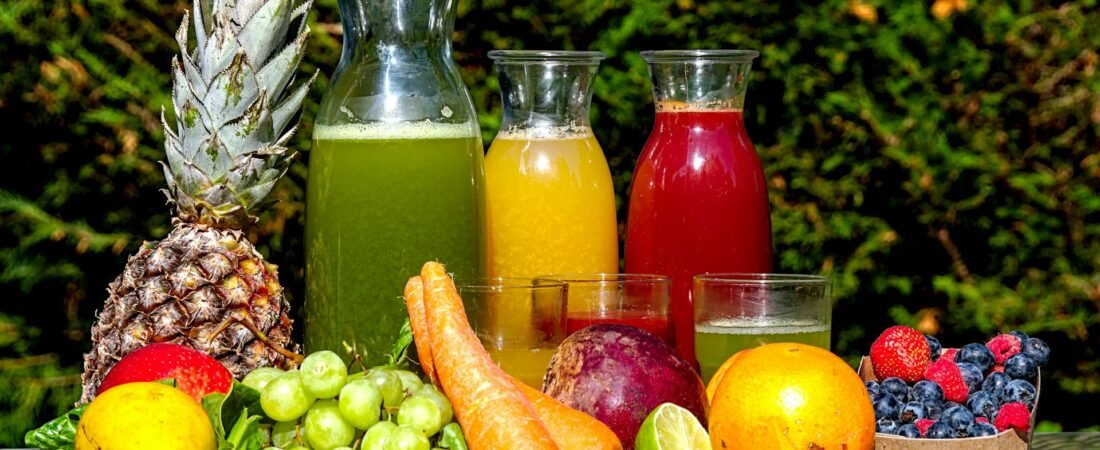
Photo by Zlatko Đurić on Unsplash
It’s fruit, it’s natural, it comes in a bottle that looks like something from the health food aisle — so fruit juice tends to get a pass that other sweet drinks don’t. That reputation deserves a closer look.
Quick summary: Not all “fruit juice” on the shelf is the same product. Juicing itself strips out fibre and concentrates natural sugar, even in genuine 100% juice. “No added sugar” describes what wasn’t put in — not how much sugar is actually in the glass. And when it comes to diabetes risk, the evidence points more clearly at sugar-sweetened juice drinks than at 100% juice on its own.
The Assumption We’re Starting From
Ask most people whether fruit juice is a healthy choice, and the instinctive answer is yes — it’s fruit, after all. It doesn’t carry the obvious red flags of a can of soft drink: no long list of unfamiliar additives, no cartoon mascot, often a label that says “100% natural” or “no added sugar.” It sits in the same fridge section as milk and yoghurt, not alongside the fizzy drinks.
That instinct isn’t entirely wrong — but it’s not the full picture either.
What Actually Counts as “Fruit Juice”?
The word “juice” on a label covers a surprisingly wide range of actual products:
- 100% fruit juice — pressed or extracted from real fruit, with no added sugar. All the sugar in the bottle comes from the fruit itself.
- Juice drinks (sometimes called juice cocktails or juice blends) — required to contain only a minimum share of real fruit juice, often topped up with water, added sugar, and — frequently — artificial flavouring or colouring designed to make the drink taste and look more like real fruit than the actual juice content would suggest.
- Fruit-flavoured drinks — may contain little to no real fruit juice at all, relying on flavouring to create the impression of fruit.
These are meaningfully different products, but from the front of the bottle — bright fruit imagery, words like “juice” and “natural” — they can look nearly identical to a shopper reading quickly. The only reliable way to tell them apart is the ingredient list and the percentage of real fruit juice stated on the label, not the marketing on the front.
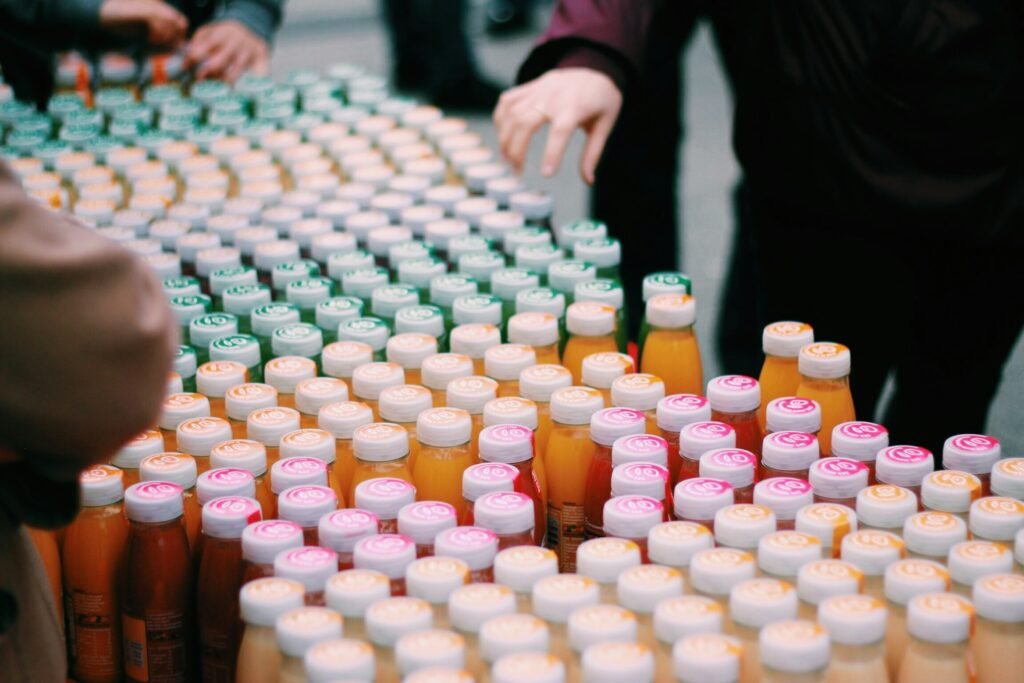
What Juicing Does to Real Fruit
Even when you’re dealing with genuine 100% fruit juice — no added sugar, no artificial anything — juicing changes the fruit in an important way.
Whole fruit comes with fibre. That fibre slows down how quickly the natural sugar in the fruit is absorbed into your bloodstream, and it takes up physical space in your stomach that helps you feel full. Juicing removes most of that fibre, leaving behind a concentrated dose of sugar with little to slow its absorption. It also takes several pieces of fruit to produce a single glass of juice — sugar you’d never realistically eat all at once as whole fruit ends up condensed into one drink, consumed in a couple of minutes.

“No Added Sugar” Doesn’t Mean Low Sugar
This is where a lot of the confusion sits. “No added sugar” is a claim about what the manufacturer didn’t put in — not a claim about how much sugar is actually in the bottle.
Fruit itself is naturally sugary. A 100% juice can legitimately carry a “no added sugar” label while still containing a substantial amount of sugar per serving, simply because that’s how much sugar was in the fruit to begin with. These are two separate questions — “was sugar added?” and “how much sugar is in this drink?” — and a label answering the first one honestly can still leave the second one looking a lot less healthy than the front of the bottle implies.
Does It Actually Raise Diabetes Risk? — What the Evidence Shows
Here the picture gets more nuanced than a blanket “fruit juice is bad” — and more nuanced than “fruit juice is fine because it’s natural,” too.
A systematic review and meta-analysis pooling several large prospective studies looked at fruit juice and type 2 diabetes risk, and found a genuine distinction between the two categories described above. Higher intake of sugar-sweetened fruit juice (juice drinks with added sugar) was significantly associated with a greater risk of developing type 2 diabetes. But when researchers looked specifically at 100% fruit juice on its own, they found no statistically significant association with diabetes risk in the pooled data.
That’s a genuinely surprising finding if you were expecting juice to be uniformly risky — but it isn’t a free pass for 100% juice either. The lack of a statistically significant link in pooled population data doesn’t cancel out what juicing does to fibre and sugar concentration (above); it simply means the evidence doesn’t clearly convict 100% juice the way it does sugar-sweetened juice drinks. The honest takeaway is that the added-sugar juice drinks are the clearer concern — not that 100% juice is something to drink freely.
The Other Way It’s Overrated: Calories and Satiety
Even setting diabetes risk aside, juice is easy to over-consume in a way whole fruit rarely is. Eating three oranges takes time, chewing, and — because of the fibre — leaves you feeling reasonably full. Drinking the juice of three oranges takes under a minute and leaves you far less full, which makes it easy to have “just one more glass” in a way you’d never have “just one more orange.” The sugar and calories add up quietly.
Practical Takeaways
- Check the ingredient list, not the front label. Look for the actual percentage of real fruit juice, and whether sugar or flavouring has been added — the marketing on the front of the bottle won’t tell you this.
- “No added sugar” ≠ low sugar. Check the actual sugar content per serving separately from this claim.
- Favour whole fruit when you can. You get the fibre, the fullness, and a naturally portion-controlled amount of sugar.
- If you do drink juice, keep portions modest — a small glass, not a refillable takeaway cup — and pair it with food rather than drinking it on its own.
A Quick Local Note
If you’re in Singapore, the Nutri-Grade label on beverages is a fast way to check a juice’s actual sugar content at a glance, regardless of whether that sugar is “natural” or added — it grades drinks A to D purely based on sugar (and saturated fat) per 100ml.
The Bottom Line
Fruit juice isn’t the health-food-aisle given it’s often assumed to be. Between what juicing does to fibre and sugar concentration, how easily “juice” products can be diluted or flavoured to only loosely resemble real fruit, and how little the phrase “no added sugar” actually tells you about total sugar content, it’s worth reading the label a lot more carefully than the fruit imagery on the front invites you to.