
Diabetes is common in Singapore, and it can do real harm. About 9.1% of Singapore residents aged 18 to 74 have it, which is roughly one in 11 adults.[1] Over time, high blood sugar can wear down your blood vessels and nerves. The World Health Organization says that can end in blindness, kidney failure, a heart attack, a stroke, or the amputation of a lower limb.[2] Closer to home, diabetes is behind about two in three new cases of kidney failure in Singapore.[3]
With stakes this high, it is natural to look for what to blame, and sugar is the first suspect. So the moment sweet food comes up, many people flinch. The answer comes fast and out of fear: no, never. Sweet food becomes the devil. Some people with diabetes, and some who worry about getting it, go further and cut out fruit as well because of the sweetness.
That reaction is understandable, but it rests on a wrong assumption: that sweet food is what causes diabetes, and that every sweet food does the same harm. Neither is quite right. Sugar is only one risk factor among several, and fruit is a very different food from sweets or sugary drinks. Fruit is part of a healthy diet. When fear makes you skip it, you can miss out on the nutrients it provides.
So is sweet food really the enemy? Let’s see what the research says. That includes a small 2025 study where mango, a very sweet fruit, did better than a sugary dessert on some measures. Then we’ll look at how to fit fruit into your day here in Singapore.
Why Sweet Food Becomes the Devil
It is easy to see why. Diabetes is a condition where there is too much sugar (glucose) in the blood, so people connect it with eating sugar. But HealthHub, the Health Promotion Board’s website, says that sugar is not the only cause of type 2 diabetes. Other risk factors include family history, age, being overweight, and not being active. Too much sugar matters mainly because it can lead to weight gain.[4]
Sweet Foods and Diabetes: What the Evidence Says About Fruit
Fruit is sweet, but studies of whole fruit mostly do not show harm. Some even point the other way.
Whole fruit in a large study
A 2013 study in the BMJ followed more than 187,000 men and women in the United States for many years, and recorded 12,198 cases of type 2 diabetes. Eating more whole fruit was linked to a slightly lower risk. The links were strongest for blueberries, grapes, and apples. Fruit juice was linked to a higher risk. The results varied by fruit: cantaloupe, for example, was linked to a higher risk, and mango was not studied. The study only observed what people ate, so it cannot prove cause and effect. Most participants were US health professionals of European ancestry, so the results may not apply to everyone in Singapore.[5]
Trials in people who already have diabetes
A 2023 review pooled 19 trials with 888 people who had diabetes or pre-diabetes. Eating fruit lowered their fasting blood sugar, and made no clear difference to HbA1c, a test of average blood sugar over about three months. The trials were small, and most were done in Iran. The authors concluded that people with diabetes should eat more fruit, as long as their total energy intake stays the same.[6]
Mango in a small study
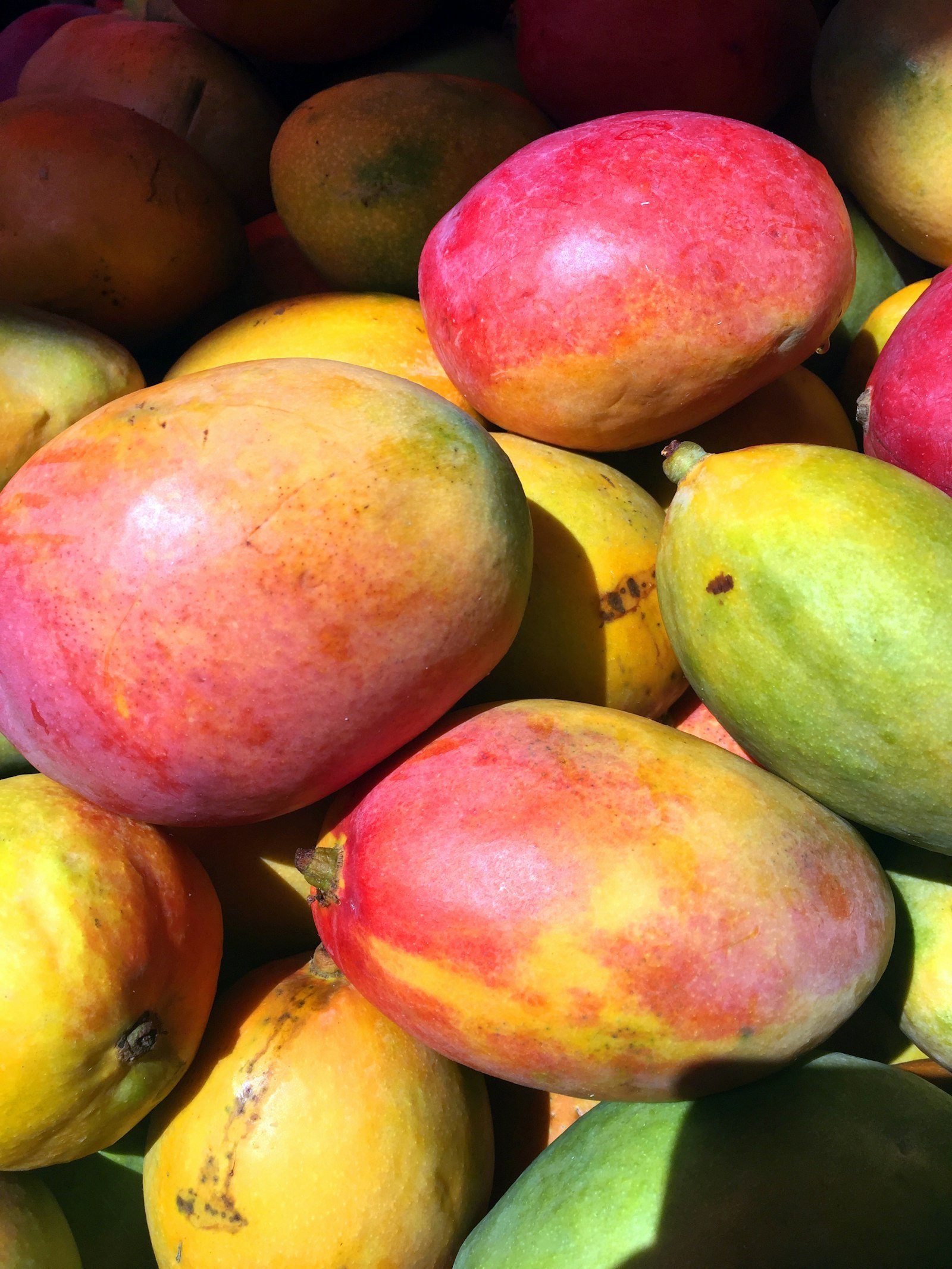
Those studies looked at fruit in general, and the BMJ study did not include fruits with a reputation of being very sweet, like mango for example. One small trial did put mango to the test. Researchers at the Illinois Institute of Technology in the United States ran the trial and published the results in the journal Nutrients in January 2025.[7]
- Who: 60 adults aged 20 to 60 started the trial, and 48 finished it. All had overweight or obesity, mild long-term inflammation, and a fasting blood sugar that was a little above normal (between 100 and 126 mg/dL, or about 5.6 to 7.0 mmol/L). People with a diagnosed long-term condition such as diabetes were not included.
- What they ate: one group ate about two cups of fresh mango a day, roughly 330 g. The other group ate an Italian ice, a sugary frozen dessert, with the same number of calories.
- How long: four weeks. Everyone otherwise ate as they normally did.
To follow the results, it helps to know what insulin resistance is. Insulin is a hormone made by the pancreas, an organ behind the stomach. It helps sugar move from the blood into the cells, where it is used for energy. In insulin resistance, the cells do not respond well to insulin, so extra sugar stays in the blood. Over time, this can lead to pre-diabetes and then type 2 diabetes.[8]
After four weeks, the mango group did better on several measures:[7]
- Insulin resistance: a score called HOMA-IR, which estimates insulin resistance from fasting blood tests, was lower in the mango group at week 4 (2.28) than in the Italian ice group (4.67). Lower is better.
- Fasting insulin: also lower in the mango group at week 4 (8.2 against 15.26 µIU/mL).
- Insulin after a sugary drink: the mango group had lower insulin levels over the two hours after a measured sugary drink.
- Weight: it changed by about 0.3 kg in the mango group and about 0.9 kg in the Italian ice group.
Some headlines said this showed mango “lowers diabetes risk”. It did not. The authors say the findings “warrant further research”.[7] No one was followed to see who developed diabetes. Fasting blood sugar and the inflammation markers did not differ between the groups. The study was small and short, and the volunteers were all adults with overweight or obesity, so the results may not apply to people with normal blood sugar or to people who already have diabetes. The National Mango Board, an industry group, funded the study, and three of the six authors have received money from it. The paper discloses this.[7]
What the study does suggest is that two sweet foods with the same calories can behave differently in the body.
What You Miss When You Avoid Fruit
If fear of sugar makes you skip fruit, what do you give up? HealthHub says fruit and vegetables are low in energy, fat, and sodium, and are good sources of fibre, vitamins, minerals, and plant compounds called phytochemicals. It names vitamin C, beta-carotene, and potassium. Diets rich in fruit and vegetables are linked to a lower risk of heart disease, stroke, and certain cancers.[9]
Whole fruit also brings fibre. The Health Promotion Board says the pulp and skin are high in fibre, which slows how fast sugar enters the blood, helps keep you regular, and helps you feel full.[10]
If you cut fruit out, you do not get these, and nothing guarantees that you will make them up elsewhere. Avoiding sweet fruit is not a harmless safety step. It can leave you with less of the nutrients and fibre that fruit supplies.
Many people already fall short. In a 2016 survey of 385 hospital outpatients in Singapore, only 21.3% ate the recommended 2 servings of fruit and 2 servings of vegetables a day. They ate about one serving of fruit a day on average. The survey was small and covered one hospital’s patients, and the most common reasons people gave were disliking fruit and a lack of time, not fear of sugar.[11] The authors of the 2023 review above also note that traditional beliefs have led people with diabetes to limit the fruit they eat, and that their intake is often severely restricted.[6] That review gave no figures, so we cannot say how common this is in Singapore.
Not All Sweet Foods Are the Same
The evidence does not say that every sweet food is fine. The form of the food matters:
- Whole fruit comes with its fibre, as above.[10]
- Fruit juice loses most of that fibre. HealthHub warns that juice with “no added sugar” still contains natural fruit sugar and can raise blood sugar as quickly as sugary drinks. Dried and canned fruit can have added sugar too.[4] The BMJ study also linked juice to a higher risk of diabetes.[5]
- Sugary drinks, sweets, and desserts add sugar with little else. In the mango study, the Italian ice group had the weaker results, although the study was not designed to explain why.[7]
- “Sugar-free” labels are not a guarantee. HealthHub says “sugar-free”, “no added sugar”, and “suitable for diabetics” labels can be misleading, so check the nutrition label for carbohydrates, natural sugars, and calories.[4]
None of this makes sweets and desserts harmless. HealthHub advises people whose blood sugar is poorly controlled to avoid sweets and chocolate. People with good control should still eat them sparingly, and check their blood sugar when they do.[4] The amount and type of sweet food matter more than the fact that it tastes sweet.
How to Fit Fruit In, in Singapore
You do not have to cut out sweet fruit, and you do not have to eat it by the cupful. The Health Promotion Board recommends 2 servings of fruit a day. One small apple, orange, pear, or mango, about 130 g of edible fruit, counts as one serving.[9][10] The mango study dose of about 330 g a day is roughly two and a half servings, which is more than the daily advice.
HealthHub’s advice for people with diabetes adds a few practical points:[4]
- Keep to about two portions of fruit a day. Fruit has vitamins, minerals, and fibre, but also natural sugar.
- Spread them out. Eating fruit at different times, or between meals, may help avoid sudden blood sugar spikes.
- Choose fresh, whole fruit over juiced, dried, or canned fruit.
- Treat sweets and chocolate with care. If your blood sugar is well controlled, eat them sparingly and check your levels. If it is poorly controlled, avoid them.
If you have diabetes or pre-diabetes, ask your doctor or dietitian how much fruit and other sweet food suits you, especially if you take medicine to lower blood sugar. For more on how foods affect blood sugar, see our guides on the glycaemic index and fruit juice and diabetes risk. If you are new to the topic, start with What Is Diabetes?
The Bottom Line
Diabetes is serious, and it is natural to be wary of anything sweet. But sweet does not automatically mean bad. Sugar is not the only cause of type 2 diabetes. Large studies link whole fruit to a slightly lower risk and juice to a higher one, and one small trial found that mango did better than a sugary dessert on markers of insulin resistance. Fruit also gives you fibre, vitamins, and minerals that are easy to miss if you avoid it out of fear. None of this makes sweets a free pass. Eat whole fruit in sensible portions, take more care with juice, sweets, and sugary drinks, and let your own blood sugar readings, and your doctor or dietitian, guide how much sweet food is right for you.
Sources
- Ministry of Health: National Population Health Survey 2024 (diabetes prevalence 9.1% in 2023 to 2024, adults aged 18 to 74)
- World Health Organization: Diabetes fact sheet
- National Kidney Foundation Singapore: Key Statistics (cites the Singapore Renal Registry Annual Report 2022)
- HealthHub (NHG Health): The Myths and Truths About A Diabetes Diet (last reviewed 5 October 2020)
- Muraki I, Imamura F, Manson JE, Hu FB, Willett WC, van Dam RM, Sun Q. Fruit consumption and risk of type 2 diabetes: results from three prospective longitudinal cohort studies. BMJ 2013;347:f5001
- Ren Y, Sun S, Su Y, Ying C, Luo H. Effect of fruit on glucose control in diabetes mellitus: a meta-analysis of nineteen randomized controlled trials. Frontiers in Endocrinology 2023;14:1174545
- Pett KD, Alex PG, Weisfuss C, Sandhu A, Burton-Freeman B, Edirisinghe I. Mango Consumption Is Associated with Increased Insulin Sensitivity in Participants with Overweight/Obesity and Chronic Low-Grade Inflammation. Nutrients 2025;17(3):490 (published 29 January 2025)
- US National Institute of Diabetes and Digestive and Kidney Diseases: Prediabetes and Insulin Resistance (reviewed March 2025)
- HealthHub (Health Promotion Board): Benefits of Fruit and Vegetables (last reviewed 27 June 2025)
- HealthHub (Health Promotion Board): My Healthy Plate
- Goh ZY, Lee PY, Lai YF. Patterns of fruit and vegetable intake and physical activity among community-ambulant patients in Singapore: a cross-sectional study. Proceedings of Singapore Healthcare 2019;28(1):10-18